What does your physical presence in a room of people say about you? The way you carry yourself, the way you speak, your volume level, your amount of eye contact, your wardrobe, your facial expression, everything.

I’ve been around a lot of people in my career and I’ve always been impressed by people who have an instant presence when they walk into a room. And then they impress even more when they speak.

The advertising industry attracts extreme personalities. Bubbly extroverts, gloomy introverts, arrogant people, shy people, brash and pushy people, and a host of others. There are people who dress like hipsters and people who dress like the janitorial staff. There are smilers, frowners, arguers, whisperers, shouters, jokesters, laughers and painfully awkward people. 

All of these character attributes affect our work. They can hold us back or propel us upward. So when you walk into a room, what’s your presence? When you speak and interact with others, what signals are you sending?

I’ve given this a lot of thought over the years and I’ve taken a lot of mental notes. The things that give people a powerful presence are actually amazingly simple. There’s no voodoo or mystery at all. 

Here is a shortlist of things that I believe make a huge impact on our personal and professional lives. They might seem obvious but, shockingly, most people don’t follow them.

1. Smile. This is one of the most effective weapons in our arsenal. A genuine smile is disarming and friendly. Any tension in the air will immediately dissipate. Plus it’s infectious. It literally compels others to smile back at you. Conversely, a scowl or straight face repels people. It makes them not want to hang out with you after work, because you are presumably a boring or rigid person.

2. Give a firm handshake. It goes without saying, but a firm handshake implies confidence and dependability. To clients it shows you aren’t a pushover. On the flip side, a limp, squishy handshake implies timidity and insecurity. So don’t be afraid to squeeze.

3. Keep good eye contact. It’s easier to do this when you’re listening to someone speak but doing it when you are speaking is powerful. It communicates intensity and conviction. Practice it on your spouse, your friends, your dog, a wall. It’s even more powerful with fewer blinks. One of my good friends uses laser-focused eye contact while he’s speaking and it elevates everything he says. I believe he really means what he says.

4. Give the gift of validation by nodding while others are speaking. It doesn’t necessarily mean you agree, it means you are giving them your full attention and you understand what they are saying. Try this game: next time you’re in a conference room full of people, give validating head nods to the speaker. You will find that their eyes eventually settle on you more than others. This is because you’re giving them what they need: validation. And, surprisingly, I’ve found that it makes it easier to make a rebuttal. Perhaps because they truly feel you heard them thoroughly. After all, most people (especially clients) just want to be heard.

5. Learn the art of small talk. This one didn’t come easy to me. I’ve been shy since childhood. But I’ve learned the power of casual conversation. The key is having something to talk about and there are only three things: (1) Yourself, (2) the other person and (3) topical subjects. It’s easy to talk about yourself but it’s better to get the other person talking about himself/herself. However, the best thing you can do is listen to news radio or read the newspaper (or the online equivalent.) It makes you informed and gives you something to talk about. 

There are many more things you can do, but these five will give your life and career a big boost. If I were to add one more, I would say increase your volume. Many people (including myself) are soft talkers and sometimes get drowned out or interrupted. 

Lastly, the above principles are ultimately only effective if you have something relevant and valuable to contribute. Otherwise, it’s all for nothing. 


-------
Everyone knows that layers in any approval process are bad. Just look at what happens when there are too many layers on the client side. And yet we’ve essentially done the same thing within the agency creative department. We’ve made it extremely difficult for exceptional ideas to make it through unscathed. The ones that do make it through are usually safe and full of compromises.

There was a time not too long ago when the average creative department was flat. There was only one creative director (or sometimes a team of two) and then creatives under him or her. The only delineation between creatives was “junior,” “mid-level” and “senior.” But all of them reported directly to the creative director. 

This worked perfectly because everyone had access to the final decision maker. They could engage in conversation, discussing problems and solutions surrounding the work, and save a lot of time. And there were fewer egos and personal agendas involved.

Now, creative departments are bloated with a lot of layers. Creative work starts at the bottom and must run the gauntlet through ACD’s, CD’s, GCD’s before finally reaching the ECD’s. And sometimes it must be approved by the CCO. It’s reminiscent of a scene out of Indiana Jones, where he had to run through a tunnel filled with flying darts, swinging blades, rolling boulders and trapdoors with wooden spikes. This is how great ideas get ruined.

What’s so wrong with layers? Here are a few things.

1. Human ego compels every person in each layer to add his or her own input to an idea running the gauntlet, often resulting in a Frankenstein. Sometimes ideas are improved along the way but more often they are not. 

2. Without direct access to the decision maker at the top, those on the bottom must try to interpret the feedback from the layer above them, which is often cryptic and contradictory. It’s the classic game of telephone.

3. It puts too many internal reviews in the process. If you are briefed on Monday and the ECD’s want to see ideas on Friday, that means the GCD’s must see it Thursday and the CD’s on Wednesday. And if there are ACD’s, they see it on Tuesday. And who knows when the account people or planners get a peek. Probably at the last minute. All of this reduces actual creative development time down to nothing.

4. It filters out great ideas too soon. Middle management CD’s like to curate. Which basically means to kill. The problem is, nobody’s tastes are identical. The tastes and biases of the ECD’s are guaranteed to be different than the intermediate CD’s. So why filter out work that the ECD might see potential in? 

5. It eliminates discussion and debate. Sometimes an idea needs to be talked out with the ECD’s. They might be on the fence with an idea and a few alterations suggested by the creative team can make the all difference. But that’s virtually impossible when they’re not in the room together.

I know some will disagree with me, but in my experience, layered creative departments are totally counterproductive. It’s no different than having a lot of layers on the client side. And every (every) creative murmurs and complains about that.

So where did these layers come from? How did this trend start? Personally, I began to see it about 10-15 years ago. I believe they started appearing and multiplying when agency chiefs discovered that promoting people with titles was an effective substitute for pay raises, and it helped keep creatives from getting lured away by other shops. 

Unfortunately, we’ve painted ourselves into a corner. Every agency has embraced this system and it’s become standard. So these layers are here to stay. The question is, where can we go from here?

Here’s one solution that I believe would make all the difference in the world: Collective CD reviews.

It would work like this... schedule one creative review with every CD-level person in attendance. CD’s, GCD’s and ECD’s. One by one, each creative team comes into the room and presents their work (or collectively with all teams together). Then everyone can make comments and have their say. And the creative team can defend their work and suggest solutions to problems, right on the spot. This way, everyone will truly share ownership and huge amounts of time will be saved.

It’s true, nobody likes big meetings with lots of people. Especially executive creatives. Probably because it’s far easier to kill work when the creatives are not in the room. However, creatives are actually more satisfied and less bitter when the ECD explains why their idea isn’t working. And they develop a much greater respect for the ECD because they say it to their face, with honesty and directness. Plus the creatives get some closure.

This method would lead to (A) better communication, (B) greater understanding, (C) less bitterness, and (D) better work. Streamlining the process can only have a positive impact.

A few years back, when I worked at Media Arts Lab, every creative presented directly to Lee Clow. Even the creative interns. The other executive creatives were standing there as well. It was a group of people roving around a room full of work. And it worked brilliantly. If Lee didn’t like an idea, you heard directly from him. And you could defend your work. Rarely did it change his mind, but at least you were allowed to speak up and hear his feedback in person.

One last thing. In the layered system, there’s a false assumption that a CD must always make a comment or request a change, even if the idea is just fine as is. And that’s totally understandable. It’s natural to desire to make your stamp. And to feel like you’re actually contributing something. But, just know, it’s okay to like something just as it is. You share ownership if you simply champion it. I believe it shows real maturity and confidence when you resist the urge to meddle unnecessarily.

-------

Addendum

I’ve received some great feedback since posting this blog entry yesterday. One comment from my friend, Annie, provided some more insight. She said: 

“I think one of the issues for these layers is salary requirements. Big agencies can't justify (anymore) the $200k+ salaries to a Senior Writer. The bean counters have to say, ‘oh, this person is important and valued, so they get a title that allows for the inflated salary.’ Titles over the decades have become very important to creatives, too. 'Look what I accomplished Mom by going to that art school!'"

Thanks, Annie, for sharing your perspective. It makes sense. In some cases, the bean counters have had a part to play in multiplying these titles and layers. Which is really a shame, since it has affected the process and the work. 

Of course there are some people out there who will say, “I got promoted with a title but never saw a salary increase!” To which I say, squeak louder and more often.


-------

Probably every art director working in advertising right now has asked himself/herself, “Why didn’t I choose to be a writer instead?”

As an art director, I’ve probably spent most of my career comping. And most of that time has been spent looking for images. It’s a sad reality and one of the reasons that I’ve become disillusioned with advertising over the years. 

Presentations have increasingly relied upon amazing layouts to dazzle clients. In my early years in the business (in the mid-nineties), it was still acceptable to present sketched comps to clients. This was great because everyone’s attention would be focused on the idea itself. It was impossible to trick any client into buying a weak idea that was obscured by beautiful eye candy.

Nowadays, if you walk into a meeting with simple sketched ideas, the reception is likely to be flat. Everyone expects finished-looking comps.

It’s only natural to try to find someone to blame for this trend. But if you ask me, we art directors can only blame ourselves. 

As highly visual people, we understood the power of beautiful visuals and we used them to gain an advantage. We discovered that our visual powers of persuasion even worked on seasoned creative directors who should have been able to see past pretty pictures, but were swayed anyway. We competitively out-comped the other art directors when multiple teams were assigned to the same project. We stayed up later and later to craft our layouts. And it worked. Our work stood out.

But look where we are now. Everyone expects luscious, high-res comps and incredible graphic design. If we have three days to develop ideas for a creative brief, we spend one day concepting and two days comping. We spend less time brainstorming ideas and more time scouring the web for great images. This has led to weaker (but prettier) ads.

I don’t think we can put the genie back into the bottle. What’s done is done. We can only look forward. The future lies in ad agencies building studios full of young graphic designers that specialize in making stuff pretty, so art directors can spend their time directing not designing. This is how it’s typically done at agencies in London. And at certain agencies like Wieden+Kennedy (or so I hear).

I do think it’s a valuable skill to be able to craft beautiful stuff. It’s empowering. But it doesn’t make bad ideas better. Sometimes it’s only a façade that hides shallow work.

I would love to see creative directors try something refreshing. Instead of expecting highly produced comps when reviewing ideas internally, CD’s should demand to see only sketched comps. It’s a true test of the power of an idea. The make-up and lipstick can come later.

I’d also love to see agencies remake their studios by filling them with young, talented graphic designers who are dedicated to comping. Perhaps treat it as a bootcamp for newbies, who eventually transition out of it and become fully-fledged art directors (knowing that it’s not very rewarding to spend your time “wristing” other people’s ideas, so nobody wants to do it for very long.)

Things won’t really change until CD’s start demanding changes. Demanding that their art directors spend more time concepting with their writer partners. Demanding more emphasis on raw ideas. Demanding that they stop using beautiful layouts as a crutch.

If you’re a young art director in school and you also happen to be a decent writer, you might consider switching to being a copywriter. You’ll have more of a life. You’ll go home from work earlier. You’ll get more time with your wife and family. You’ll get more sleep.

On the other hand, as an art director, you’re kind of a one man/woman band. Often I’ve worked alone because my writer partner was on vacation or unavailable. And I managed pretty well, since I was able to use my design skills to bring ideas to life singlehandedly. 

Whichever way you look at it, I believe art directors are the hardest working people in advertising. That is, if you measure it by perspiration instead of inspiration. Too bad the majority of ideas never see the light of day. That’s a lot of man hours spent making beautiful clay pigeons. 

-------


This is how most creatives see it: “I dreamt up the idea, I lovingly nurtured it, I painstakingly toiled over it, I passionately pleaded for it, but the client killed it. So I’ll just recycle it later.” 

What creatives seem to forget is, they signed an agreement when they were hired that says their ad agency owns it. So, technically, it’s not theirs to recycle if they leave that agency.

But the rules seem a little hazy. Recycling is incredibly common. Pretty much every creative I know recycles their old ideas from time to time. Yet, we never seem to hear of agencies suing them over this kind of thing. So most creatives feel safe recycling.

Perhaps agencies don’t sue because, by the time they find out about it, the recycled idea has been produced by another agency and is on air. So it’s too late to claim ownership. Or perhaps because it makes them appear petty and desperate. Like the kid who ignores a toy until another kid picks it up. Then suddenly they’re fighting over it.

Whatever the reason, it’s like a big hole in an electrified fence, where everyone seems to be stepping through without injury. But one day, someone will get fried. So be warned. When you recycle an idea, there is some risk of getting burned.

Despite that, it may be a risk your willing to take. Personally, I have old ideas that are too good to let die and nobody has done them yet. Some of them are a few years old so chances are greater that memories have faded and nobody remembers them.

Not that I don’t strive to come up with new ones. Of course I do. Ninety-nine percent of the time. But sometimes an old idea is a perfect fit.

Here are three things to consider when recycling. 

1. Realize that you are breaking the agreement you signed.

2. You most likely collaborated on the original idea with a former creative partner who now works someplace else. He or she will definitely feel slighted if you recycle the idea without their knowledge, since they’ll likely not get credit for it. The proper etiquette is to call them and ask if they’d be okay with it before you represent it. Chances are, they’ll be cool with it. But it’s polite to ask first.

3. Take into consideration the length of time that has transpired. Anything over two years is unlikely to cause a conflict. Memories fade. Anything five years and beyond is highly unlikely to cause a problem. But, after five years, ask yourself: is the idea still fresh?

Those of us who have been around a while accumulate a file cabinet full of unused ideas. I specifically remember working on a project with a very seasoned freelancer, who brought ten amazingly thought out ideas to the table in a single day. I thought to myself, “Either this guy is the most prolific creative ever or there’s a bunch of recycled ideas here.”

I think there needs to be new rules governing intellectual property. Individuals should be allowed to legally regain ownership if the ideas they generate are unwanted by their employers. After all, generating ideas is difficult. Paying for them is easy. Why does the individual do all the hard work and the agency get all the ownership, even after they toss them into the trash? It’s just a natural instinct for a creative to claw through the landfill, find his cherished idea, dust it off and file it away for later use.

Since laws are not likely to change, it makes sense for each individual to request an amendment to the agreement they sign when they’re hired that stipulates they will regain ownership of their rejected ideas after 24 months. Or something like that. The hiring agency might go for it, if they want you bad enough. Better yet, consult your attorney before signing if you’re serious about it. Or simply assume the risk later. It’s up to you.

Personally, I’d think twice about contacting your old agency about an old idea you dreamed up while under their employment. They’ll probably say no by default. After all, you signed the piece of paper agreeing to the terms of employment. They own your ideas. 

Most creatives take a “Don’t Ask, Don’t Tell” approach to recycling. It seems to be working. I just hope nobody gets burned.

-------
Creative departments are increasingly assigning multiple teams to projects. Gone are the glorious days of personal ownership, where a single team tackled a brief. Now creatives are expected to duke it out in gladiatorial combat for their CD’s. 

Oftentimes it means taking turns presenting ideas in a group setting—just like ad school, presenting to a room full of your peers. This can be a little unnerving, but it’s exhilarating when you have ideas you’re excited about. And you can make a statement with your work.

If you’re slated to present your work in a group setting on your next project, choose to go first. It has a few advantages. 

Here are five:

1. It shows initiative. 

Be willing to lead the charge by choosing to be the first on stage. There is always a moment when the CD says, “Okay, who wants to go first?” This means nobody is making a decision and it’s wide open. It’s your chance to take the ball and run with it. This can only reflect positively on you.

2. It shows confidence. 

Most people hate to go first. They’re simply afraid. Or they’d prefer to wait for others so they can stall for more time to mentally prepare and to form their arguments. So volunteering to go first shows boldness, which also reflects positively on you.

3. It helps you stake a claim.

Sometimes a great idea is so obvious, other teams arrive at similar conclusions. Which means, if you go first, you sort of get “first dibs.” Unless someone else executed the same idea better or is buddies with the CD (in which case, personal favoritism could unfortunately be a factor).

4. It helps protect your reputation if your ideas are weak.

Let’s face it, nobody bats a thousand. Sometimes, we haven’t nailed it and our ideas are a bit weak. When you go first, other creatives aren’t paying very close attention. That’s because they are mentally preparing for their turn and therefore distracted, so they won’t scrutinize your work as much. This is helpful if you actually respect the opinions of your fellow creatives. So, if you want to reduce embarrassment because you didn’t bring your ‘A’ game, go first.

5. It’s a win-win.

If you go first and your ideas fall flat, the CD will be more likely to forget about it, since he or she must absorb a lot of work. Bad work is more easily forgotten, so by the time the meeting has concluded, the memory of the flat ideas has started to fade. However, if your ideas are amazing, everything else presented afterward by the other teams will pale by comparison.

I’ve learned to love group presentations. It gives you a great opportunity to practice your skills on people who tend to be highly critical. If you hit a home run, everyone will remember it. And if your creative department is truly collaborative, ideas will be more likely to cross-pollinate around the room and benefit everyone by helping to create shared ownership.

So next time, choose to go first. And go strong, with full confidence and enthusiasm.


-------


The world is full of ignorant people. We despise them. We’re embarrassed by them. We sigh and shake our heads because they give humanity a bad name. Then we thank God we’re not one of them. 

Right? 

Actually, there’s a good chance you are ignorant as well. In fact, a one hundred percent chance. If you stop to think about it, we are all ignorant in some respect. 

Nobody—absolutely nobody—knows everything. It’s impossible. Not if you had a hundred lifetimes. So why are there so many know-it-alls? Why are there so many “infallible” people? Do they really think they’re smarter or better?

There are two kinds of people:

1. Those who don’t know it all but pretend to.
2. Those who don’t know it all and admit it.

Between the two, the people in category number two have greater potential in life. Here’s why.

Both categories of people can hunger for knowledge. Both can stay up on the news, read books, have meaningful discussions and debates. But the people in category two have humility, which turns out to be the special sauce that enables greater potential. 

Humble people openly admit error. They aren’t afraid to say, “Huh, I didn’t know that.” They’re more likely to abandon their preconceived notions. They’re less biased. They’re more teachable. And therefore more situated for personal growth.

They’re also more willing to take risks and make mistakes, which is critical for success. Soichiro Honda said, “Success is 99% failure.” Are you willing to fail to achieve success?

These people view life as a never-ending journey of personal growth and achievement. They acknowledge their own ignorance, take aim and destroy it. 

Conversely, “know-it-alls” find it extremely painful to acknowledge their shortcomings. Perhaps they’ve spent years accumulating a treasure chest of knowledge or academic achievements. Perhaps they’ve garnered admiration and praise from parents, family, colleagues and associates. So admitting ignorance or incompetence in any way exposes a weakness they’d rather not admit: that they might be wrong. Their reputation just can’t take the hit.

They are particularly disdainful of less intelligent, less accomplished or uncredentialed people. So they disregard them completely.

Take for instance, a folk remedy for a health ailment. Often know-it-alls will disregard it, because it’s unendorsed by the scientific community. They’ve embraced an established system that refuses to even investigate a natural remedy claim. So it threatens not only their beliefs but their allegiance to the intelligentsia.

So how does this observation help us in our professional careers? 

If you make a concerted effort to change your mindset, admit your own ignorance and suppress the sting to your ego, then you begin to take the first step toward becoming more. You’ll not be afraid to make mistakes, not be afraid to change your mind, not be afraid to stick your foot in your mouth, not be afraid to apologize.  

Projecting an aura of infallibility doesn’t garner admiration. It makes others doubt your sincerity and honesty. And ultimately doubt your leadership. 

The first step toward greatness is the decision to be humble and have the courage to acknowledge your own ignorance. Then take aim and destroy it by enlightening yourself. And—this is key—if your new found understanding doesn’t align with your preconceptions, you must swallow your pride. Which is easier said than done. 

I’m amazed at how many ways I’ve been enlightened by new information in recent years, and how strong my human nature resists it. Damn stupid pride. It stops us from growing and becoming better humans.

Our world is more connected and more informed than ever before. There’s no better time to retool your brain to analyze everything. So take the time and make the effort. Help change the world for the better. Go in search of ignorance. Starting with your own. 

But be careful when you set your sights on someone else’s ignorance. You can’t force someone to understand something, no matter how hard you try. You can’t cram it down their throat. Don’t forget, they have stupid pride as well. They won’t change unless they want to. So do it tactfully and subtly. Forward a blog posting or great article and say, “I found this really interesting.” And speak about your own transformative experience, rather than trying to “school” them.

You leaders out there, be humble. Admit mistakes and bad judgement calls, then course correct. You have a lot more eyeballs on you, which means you can be a great influence. You can lead by example.


* * * * * * *
It’s not any one particular event or moment. Rather, it’s something I’ve done almost every day of my career. And I’ve suffered for years because of it.

I failed to speak up.

If you’re like me, you often bite your tongue when you should speak up. Especially when you disagree. Probably because we all have a natural human desire to be liked and not be seen as disagreeable. 

Many times I’ve been in a meeting with a room full of people and I’ve felt the urge to speak up, but I think to myself, “There are a bunch of smart people in this room and nobody is saying what I’m thinking. Perhaps I’ll keep my mouth shut.” However, the reality is, others are waiting for someone else to say it first.

I can trace back my timidity to childhood. I spent the first ten years of my life with a single parent—my mother. She was nurturing and loving, and a great mom. But she was also protective and cautious. Eventually, my mom married and I got a stepdad. He was bold and adventurous. That influence helped a lot. Nevertheless, I struggled to overcome that timidity for years. 

A good friend of mine always talks warmly about his dad. One thing his dad told him was, “Son, I never want to hear that you started a fight. However, I never want to hear that you ran away from one either.” Talk about being between a rock and a hard place! But this mindset has served him well. He’s bold, not timid. And I admire that.

I’ve pushed myself in recent years to speak up. Not sheepishly, but with conviction. The good news is, I’ve gained a lot. Now I probably speak up too much. I’ve stuck my foot in my mouth many times. I guess I need to learn tact as well.

But here’s the thing: the more I’ve discussed this with other people, I’ve discovered it’s not just me. It’s a lot of people. People are afraid to speak up. 

How often have you sat in large meetings and only 2 or 3 people are doing the talking, while the rest of the people just sit there? Those quiet people are definitely thinking something. Perhaps something important. But they are too afraid to speak up.

If you are failing to speak up, these are my words to you:

Don’t sit silently. Don’t be afraid to speak. Don’t let an important thought go unexpressed. Speak up. The world needs your input. You might just solve the problem. You might just save the company millions of dollars and hundreds of man-hours by being the voice of reason.

What you may not realize, is that when you do speak up, people appreciate that you actually have an opinion. Even if they don’t agree with you, they’ll respect you.

If you’re a manager, I suggest that, before every meeting, you announce to the room:

“Before we get started, I just want to state that everyone in this room is important or you wouldn’t be here. We need your input. Don’t be hesitant. Feel free to disagree with anything. Just say it. We want your point of view. Speak up.”

The world would be a better place if most of us weren’t so timid. 

That said, there are some of you that talk too much. You are combative, obnoxious and just won’t shut up. You need to pipe down so others can speak. 


* * * * * * * 


We’ve all been told since childhood, “Quitters never win.” But then, what about smoking? Or alcoholism? Or any other destructive habit? Clearly, sometimes, quitters do win.

Wondering if you should quit your full-time job to freelance? You are not alone. Thousands of people are thinking the same thing at this very moment. Even though we constantly fantasize about quitting, fear compels us to stay full-time. Particularly those who have never freelanced before.

For 16 years I moved from agency to agency, always as a full-time employee. I had never freelanced before. Although I toyed with the idea many times (usually because I was fed up with my boss, my employer or my client), I never took the plunge. Then I “got quit” a couple years ago and it was the best thing that ever happened to me.

After a few months I thought to myself, “Why didn’t I freelance a long time ago?” But, of course, I knew the answer. . . I was scared.

My career had been through peaks and valleys, but way more valleys than peaks. Through it all, I always held out, thinking that something great was bound to happen eventually. But nothing really did. At least not to my satisfaction. Except to say I gained valuable experience working with other people and was privileged to work on some big, notable brands. 

The other day, as I was thinking back on my career, it occurred to me that others are struggling with this quandary right now. If you are, read on.

I can’t say freelance is for everyone. I’ve met some people who hated it and others who loved it. The truth is, everyone is different. There are a few factors to consider before you make your decision. Test your situation using the criteria below.

CRITERIA:

1. Marital status

A lot of people think their marital status or family situation has a lot to do with it. The truth is, it does not. There are plenty of successful freelancers who support families quite easily. The main obstacle for some is the lack of health insurance benefits for freelancers. While that’s true, it shouldn’t be a barrier. You only need to work one or two days of freelance per month to pay for your whole family’s private health insurance plan. Unless you have a child with a chronic health condition, requiring frequent doctor visits, freelancing is totally viable.

2. Personality type

This factor should have more to do with your decision than anything else. Are you a confident/optimistic type or a worrying/pessimistic type? If you’re a worrier, then perhaps freelancing is not for you. 

Then again, full-time employment is not much comfort either. You could be laid off at any moment without warning. At least when you freelance, you become master of your domain and nobody controls your fate but you. To me, that’s more comforting than full-time employment at a company that has little regard for employee loyalty or longevity. 

Also, I used to be a worrier, but now I’m not. Thank you, freelance.

3. Personal experience

It’s true, seasoned veterans tend to get more work. Only because the hiring agency is getting extra “insurance” through their accumulated knowledge of the business. The downside with seasoned veterans is they often have less social and digital experience. 

My advice? 

If you’re a seasoned pro, bolster your social and digital presence. Start a blog, an Instagram or Tumblr page, start tweeting. Package your favorite un-produced social and digital ideas—and put them on your site. 

If you’re a newbie, emphasize your youth, enthusiasm, cultural relevance and hard work ethic. And play up your social and digital chops as well.

That said, it’s really about generating the big ideas, irrespective of the media vehicle. That’s what keeps agencies calling you back again.

4. Brand experience

This seems to be important. Although I’m not positive, because I’ve personally been blessed to have worked on a lot of Fortune 100 brands. So even though I wouldn’t consider my portfolio stellar, I do have notable brand experience, especially in automotive and tech. 

But I know other freelancers who have less big brand experience and they’re doing just fine.

5. Ambition

This is another huge factor. You can’t wait for things to happen, you have to make them happen. The biggest key to successful freelancing is networking. As they say, it’s not what you know, it’s who you know. So get to know a lot of people. Make connections. Also, spend your downtime on personal creative projects. You will be way more fulfilled. 

The second biggest key to successful freelancing is, you must work hard to impress each employer to give them a reason to call you back again.

6. Current financial status

Sadly, some people are too heavily leveraged. They’ve been living beyond their means and have little or no savings, huge car payments, big rent payments and hefty credit card balances. This is a recipe for disaster. My advice? Streamline your expenses. Live modestly. Stop pretending to be a rock star. Even the real rock stars are eventually forced to play concerts at county fairs in their golden years just to make ends meet.

Another factor not numbered here is your spouse’s state of mind. The decision to quit will probably be met with a lot of resistance. And after you quit, they’ll continually urge you get another full-time job. Especially the wives. The security of a full-time job is important to them. In this scenario, you have two choices: (1) prove that freelancing is viable for your household or (2) admit defeat and go find another full-time job.

During my freelance stints, I’ve had a number of full-time job offers, but my personal preference is to remain freelancing unless the greatest job in the world comes along. Even then, I wouldn’t take a full-time job unless I freelanced there first. My downtime is too precious. I have a ton of personal creative projects in development.


EVERYTHING WILL BE OKAY

If you get laid off, don’t panic. You’ll be surprised how un-scary it is. And you’ll probably like it. I did and I still do. But it might take 2-3 months to hit your stride.

Recently, my good friend Stephen was sharing stories of his successful transition from agency employee to president of his own company. He quit his job and started a small agency in Boston, where he now has a handful of clients, an office space and employees. I asked him if it was scary making the move. He said, “Yes it was.” However, he quickly found out that there was nothing to fear. Things worked out fine.

Then he shared a great story. Once, a few years back, his young daughter was climbing a tree on a sunny afternoon. She was playing on the branches, having a blast. But, at some point, she lost her footing and found herself dangling from a branch, holding on for dear life. As her grip began to slip, she cried out, “Daddy! Help!” From a few feet away, he couldn’t help but laugh because she didn’t realize that her feet were only 3 or 4 inches from the ground. He told her to simply drop. After some convincing, she finally looked down and was relieved to see her toes practically touching the grass. She dropped safely on the ground. “This,” he said, “was just like me when I was afraid to take the leap.”

What an awesome illustration. The point is, you will make a soft landing if you decide to quit and freelance. As long as you resist the fear, stay positive and be tenacious.


PROS & CONS

Here I’ve listed some pros and cons of freelance versus full-time. Perhaps it will help you in your decision.


* * * * * * *
There are many ways to run a new business pitch. But here’s the very best way to do it — in 10 easy steps.

New business pitches can be a thrilling experience. They provide a vast, blue sky to dream up ideas and a big win can be euphoric. But they’re also an intense pressure cooker, bringing out the best and worst in people. Emotions run high, egos are easily enflamed and everyone seems to become infected with a savior mentality. 

In the last 18 years, I’ve participated in about 50 new business pitches, in a wide variety of advertising agencies, big and small. And I’ve personally led a few of them. If a pitch is run poorly, it can be a disaster, leaving everyone frustrated, exhausted, confused and unappreciated. And it can scuttle any hope of winning the business. To avoid this, follow these ten pointers on how to properly lead a new business pitch and make it more collaborative, more effective and more fun.

Before we begin, ask yourself a few important questions. 
  1. Is the potential client a good fit with your company culture and beliefs? Too often, companies go for the cash, but what they win is a clash of cultures. And subsequently a caustic relationship that sends talented employees running for the exits. 
  2. Is your potential client looking for someone to lead them or someone to follow orders? Savvy clients trust their agencies as expert practitioners and want to be led. 
  3. Is your potential client smart enough to know the difference between marketing and advertising? A lot of clients say they want a holistic marketing effort but what they really want is a conventional ad campaign. These clients should be avoided if you care more about your long term reputation than making short term money.
Assuming you’ve answered these questions and checked all the boxes, here’s the best way to proceed with leading the pitch. (There are some free resources included at the end of this post.)


STEP 1: DIG

It goes without saying that research is important, but most ad agencies do a very poor job of it. You absolutely must know everything about the company’s products and services before you can formulate a strategy. But most importantly, you must understand why that company exists in the first place. What are their beliefs? What are the principles upon which they were founded? Go back to their roots to find something truly substantive. This research begins with the initial client briefing and Q&A. 

Tip: Always include the creative lead in the client briefing. Their brain is wired differently, which compels them to ask different questions than account management or planning. And they have a uncanny bullshit meter that far exceeds that of any other agency discipline. 


STEP 2: CREATE A WAR ROOM

Reserve the largest conference room in the building and create a “War Room” for the remainder of pitch. Do not allow the room to be used for anything else. This will be the central headquarters for everything pitch-related. Everything will go on the walls. Research, quotes, scribbles, photos, diagrams, notes, ideas, everything.

Gather as much competitive work as possible and put it on the walls. Know what’s been done and by whom. This is crucial. Time is wasted when directions are explored and ideas developed, only to find out later that a competitive brand has already pursued that path.


STEP 3: HASH

After the research is compiled, don’t just send the planners away by themselves to write the brief. Invite a diverse group of key players (creative, account, planning, technologists, social media gurus, etc) to sit in a room and hash it out. Get the smartest people, irrespective of seniority. Make sure to invite some smart, young, vocal people as well. They’ll provide some critical perspective. Encourage open participation. Let everyone know that those who fail to contribute their opinion will be asked to leave the meeting. This is no place for quiet, mousy types.

Set aside the entire day and just talk. Write everything down. Bring in lunch. And dinner if necessary. One intense day in a collaborative brainstorm with a bunch of smart, opinionated people is worth more than ten days of back and forth debate via email and hallway conversations.

Formulate a brand statement, based upon the client’s core brand belief. Write it out in plain, concise language. This will form the foundation from which a creative platform will be constructed.


STEP 4: PLAN

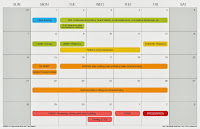
Your plan will consist of key dates on a calendar for the entire pitch process. It will include all meetings, check-ins, creative brainstorms and internal presentations. This will be your roadmap and you should stick to it as closely as possible. 

This ensures that there are no surprise meetings and unexpected events. Everything will be predictable and everyone can manage their time individually. Make a list of all agency personnel who will participate in the pitch and email them this plan. (See a generic sample plan at the end.)


STEP 5: BRIEF

The first item on the plan is the briefing. This will not be a conventional brief with pages of text. Instead, it will be a single-sentence statement that is born from the ‘hash out’ session. The ammunition will be the wall of research. (A deck containing the research can be compiled and distributed separately.)

The goal is to keep everything ultra-condensed. If you are to communicate a compelling and relevant brand message to your audience, it must be simple and singleminded. Wordy creative briefs can get people bogged down in minutiae. Instead, distill it down to the key essential takeaway. 

This part of the briefing is very important: When you gather your creative teams together, their first marching orders are to brainstorm platforms ONLYnot executional ideas. That will come later. 

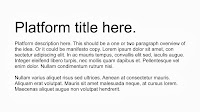
A “platform” consists of a brand belief statement articulated in a single word, phrase or tagline, supported by a short paragraph rationale, which might be written as a manifesto. It should fit on a single sheet of paper and should not include any images or design elements. Just black text on white paper. (See generic platform template at the end.)

The creative teams should get at least two or three days to develop platforms. Longer, if time allows. Planners and account management should not be excluded from this part of the process. An insight can come from anywhere. A standardized platform template document should be distributed to everyone so that everything is judged on an equal plane. Remember, no fancy designs or pretty pictures at this point. Just words.

As platforms are developed, creatives should be encouraged to pin them anonymously to a wall in the War Room, and everyone must have access to it. This anonymity removes personal bias and the wall itself provides inspiration to everyone. This platform wall will enable cross-pollination of ideas and lead to stronger thinking. You’ll see platform ideas quickly fill up an entire wall.


STEP 6: CHOOSE

Many pitches include an initial “gut check” or “tissue session” with the prospective client to ascertain whether the agencies are gaining traction with their ideas. This means you’ll  need about three platform ideas in the beginning. (Later, you’ll narrow it down to just one. Preferably.)

After the wall is filled up with platforms, schedule a meeting with only top agency players to discuss. Set aside plenty of time. A few hours if necessary. This is where the top 2-3 platforms will be chosen, so make sure everyone is in agreement before proceeding. 

Note: this is one time when a room full of people is counterproductive. Creative teams will naturally defend and promote their own platform ideas and it can quickly devolve into an old west shootout. So it’s best to invite only the top decision makers: the ECD’s, the CCO, the Managing Director, the Planning Director, the CEO, and so on.

Once everyone agrees on 2-3 platforms, it’s time to brief the creatives again. Eventually, when it’s narrowed down to one platform, make sure it’s the one. Don’t change your mind at the last minute. You’ll throw your pitch into a tailspin. Be sure about your chosen platform before you take the leap.


STEP 7: RE-BRIEF

First, identify the main contributing teams of the chosen platforms and assign them to articulate their ideas in a manifesto form (if they haven’t already). Add a couple additional people to help out if necessary. 

Most of us loath manifestos because we’ve written so many and it’s become a cliché to have them on the wall. But they still work. They work because they represent the brand belief, written in a concise, poetic way. The key is to not make it sound like the typical, formulaic manifesto. It should feel honest, sincere and conversational. Somewhere, it should probably include the words, “We believe...”

Put these platform manifestos on the wall. This will feed the upcoming brainstorming session.


STEP 8: BRAINSTORM

Invite all your thinkers, not just creatives. Invite planners, account execs, technologists and producers as well. Keep it collaborative. This is not a competition to see who can save the day, this is about cross-pollination of ideas. 

Divide the large group into small groups of five to seven people, mixing up the various people. The brainstorming session should last 60-90 minutes.

The mission: Ask everyone to remain media agnostic. Try to avoid Super Bowl spot ideas, print ads and billboards for now, unless they are truly original and remarkable. This is about finding any idea that gets the audience noticing, talking and sharing.  A stunt, an app, an airport kiosk, a bumper sticker, a urinal cake, whatever. Then send the groups into different rooms to think.

Afterward, ask the groups to reconvene as a whole and present their individual group ideas to the room. Put everything on the wall. Open discussion should be encouraged. 

Whoever leads the meeting should establish right from the beginning that there are no bad ideas. In fact, you want to get the bad ideas out. Say anything and everything. It should be like popcorn popping, with everyone throwing out ideas and riffing. No filtering. Just creativity in its rawest form. 

Scribble, sketch and write everything on giant sheets of paper, and tack them around the room. Even a bad idea can trigger a genius idea. That’s why bad ideas are important too. 

From this, the best ideas can be identified by the ECD’s and CCO's, and assigned afterward to individual teams for further development.

Tip: Keep it flat. Whatever you do, resist the urge to create approval layers by assigning team leaders. Often, there are ACD’s, CD’s and GCD’s, all with varying levels of experience and there’s an inclination to create a hierarchy to filter or “curate” ideas, with the ECD or CCO at the top, viewing only the “cream.” This is counterproductive for a couple reasons: (1) It ignites egos, particularly if there are CD’s that must now report to other CD’s—creating a clash of equals. (2) “Curating” is the last thing you want in the beginning stages of creative development. Filters are harmful. They filter out great ideas that the ECD or CCO will never get to see, due to personal bias, ego or individual tastes. 


STEP 9: ASSIGN

By now, you should have enough great ideas to fill a wall. Anywhere from 25 to 50 ideas, big and small. It’s time to assign these ideas to individual creative teams to be crafted. Naturally, you will trace back ideas to their original authors, but everyone should be given something to make.

Project managers should be assigned to monitor the progress of crafting. This is critically important! They will be used to manage workflow, facilitate resources, acquire assets and update agency leads. Everything will be charted in an Excel-type document, so creative leads will know who is doing what.

As ideas are comped, they should be pinned to the War Room wall, under columns of labeled media silos (such as: in-store, mobile, social, stunts, cinema, TV, outdoor, print, microsites, programs, apps, etc.).

This way decision makers can review the wall as often as they like to get a panorama of all the work in progress, without having to make the rounds to individual teams. This will save everyone time.

Note: Brainstorming should continue through this ‘crafting’ process. Often, in the process of bringing ideas to life, new ideas are born. These should be comped and placed on the War Room wall as well.


STEP 10: FINISH

The final step consists of guiding and refining the work to meet the satisfaction of the agency leaders. Using the War Room wall, they can convene whenever they like and send revision requests to the creatives via the project managers. This way, the creative teams can keep working without wasting time in meetings and regroups. Discrepancies and discussions can be made on an individual basis (if say, a creative team disagrees with a requested revision from agency leaders). 

Everything will eventually be compiled in a presentation deck by an experienced person with some graphic design skills, with the project managers acquiring assets from individual creatives.


FOR THE PRESENTATION:

These days, more and more presentations are made strictly on a video screen. This is a missed opportunity. In addition to the video screen, surrounding the room with printed work is a terrific bit of theater. It can be simple tabloid printouts pinned to gator boards or oversized plotted printouts. It’s impressive to see a room full of work and gives the prospective client a wide snapshot of the entire brand effort. It also allows for a better post presentation discussion.

There you have it. Of course, this is only a formula for creative development. I’ve excluded any suggestions for set-up slides and strategic stuff. And some pitches include a client “tissue session” midway through the pitch, which isn’t directly addressed above. Nevertheless, the same process applies.

Try these simple steps on your next new business pitch. You won't be sorry.


-----


FREE HELPFUL RESOURCES:

Note: The documents below are generic and not copyrighted. You have permission to download, modify and use them as you see fit. (The thumbnail images/links below are just JPEG samples. To download original documents, click my Google Drive download link below.)

DOWNLOAD LINK:

Documents included:
-Pitch Cheat Sheet
-Pitch Calendar (2 versions)
-Pitch Platforms template ( PPT, Keynote, InDesign)


Also: You might be wondering why I should care about this subject. Or why I would take the time to create these free documents? My answer is, anything that can help pitches run more efficiently and effectively, and spare people a lot of grief and wasted man-hours, is well worth it to me. I've been in enough pitches to discover that most agencies need help badly. -JB


-----

REMEMBER: Subscribe at top right of this blog to receive an email when a new post is available!